
If you’re new to the world of show jumping, you may have heard the buzz about air vests. These high-tech safety devices are relatively new to the sport, and have been creating quite a stir in the equestrian community. They are increasing in popularity and becoming more wearable as the technology improves. But what are they, and should you consider investing in one? Let’s dive into the world of air vests to help you make an informed decision.
What Are Air Vests?
Air vests are a relatively recent addition to the show jumping scene, especially in the more esthetically conscious hunter rings. To best describe them, the protection they provide and the technology that goes into them, think about a cars air bag. Essentially, riders are wearing vests that contain air canisters and tightly packed air bags. The rider attaches a lanyard from their vest to their saddle (picture how you attach a jet ski safety to the jet ski riders life jacket). When the rider falls, the lanyard triggers the air bag activation and the vest instantly inflates protecting the riders torso, neck and spine by absorbing and dispersing impact.
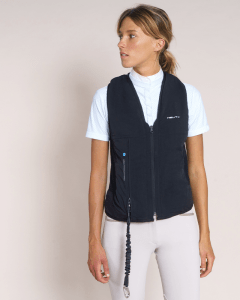
Pros of Air Vests:
- Enhanced Safety: The primary purpose of air vests is to reduce the risk of serious injuries by providing extra protection. They can be a real game-changer, especially for novice riders or those jumping substantial heights.
- Comfort and Freedom: As the technology improves, air vests are being designed with rider comfort in mind. They’re lightweight and ergonomic, allowing for a full range of movement in the saddle. Many are designed with competition in mind delivering a sleek and discreet appearance.
- Easy to Use: Air vests are straightforward to put on and take off, and they can be worn over your regular riding attire and show coat. Most models have a quick-release mechanism to ensure you can get in and out of them with ease.
- Custom Fit: You can usually adjust the inflation level of the vest to your preference, giving you a personalized level of protection.
Cons of Air Vests:
- Cost: One of the primary drawbacks is the price tag. High-quality air vests don’t come cheap. However, when it comes to safety, it’s often worth the investment.
- Maintenance: You’ll need to maintain the canisters and check them for expiration dates regularly. Also, they may need occasional servicing.
- False Deployments: In some cases, air vests can go off unintentionally, like during a sudden dismount or if your horse spooks. This can be startling, but it’s generally better to be safe than sorry.
The Increasing Popularity of Air Vests in Gold or “A” Circuit Showing:
In recent years, air vests have gained popularity not only among seasoned riders but also among newcomers to the sport. Many professional riders swear by them and wear them during competitions in both the hunter and jumper rings. They appreciate the added peace of mind that air vests bring to the arena.

Parents, in particular, are embracing air vests for their children who are just starting out in the sport. Safety is a top priority, and these vests provide an extra layer of protection for their young riders.
However, remember that air vests are not a substitute for proper training and safe riding practices. They are a valuable addition to your safety toolkit, but they won’t make you invincible. Always wear your certified riding helmet and practice good horsemanship.
So, should you invest in an air vest? If you’re enthusiastic about the sport and value your safety, it’s definitely worth considering. While they have their pros and cons, air vests can provide that extra layer of protection and peace of mind that can make all the difference in your riding experience.
Ultimately, the choice is yours. If you decide to go for it, make sure to do your research, read reviews, and consult with experienced riders. Safety first, and let’s jump those fences with confidence!
Check out Where To Invest And Where To Save a one-page guide to some of your biggest expenses in horse ownership.
Liked this Info? Get more FREE Content!
We offer helpful advice and resources for first-time horse buyers. Stay informed by subscribing to our content.
Explore the So You’re Going To Buy A Horse FREE STUFF: Your Ultimate Destination for FREE Content!
Other Posts You Might Like

How I Organize My Life As An Adult Amateur
Are you curious how it’s done? How we seem to ‘have it all’? Ride horses, have families, professional careers.. you know, how we’re “living the…
Keep reading
3 Reasons To Work With A Professional
Have you ever Googled “how to buy a horse” or “what to know before buying a horse”? If so, please—lovingly—step away from the keyboard. I…
Keep reading
5 Myths About Buying Horses That You Need to Stop Believing
So, you’re on the hunt for your dream horse, and everyone has advice to offer. But let me tell you – not all that advice…
Keep reading
7 Red Flags to Look for When Buying a Horse
So, you’re ready to buy your first horse? How exciting! But before you get swept up in the excitement of bringing home your new partner,…
Keep reading
Is Buying A Horse A Good Investment?
Is Buying a Horse a Good Investment? If you’ve been daydreaming about owning a horse, you’re not alone. For many equestrians, the idea of having…
Keep reading
Life Lessons From The Arena
I often find myself reflecting on my time with horses. Sometimes it’s when I’m overwhelmed with gratitude and my heat swells while I’m out riding…
Keep readingSomething went wrong. Please refresh the page and/or try again.
 Buying A Horse?