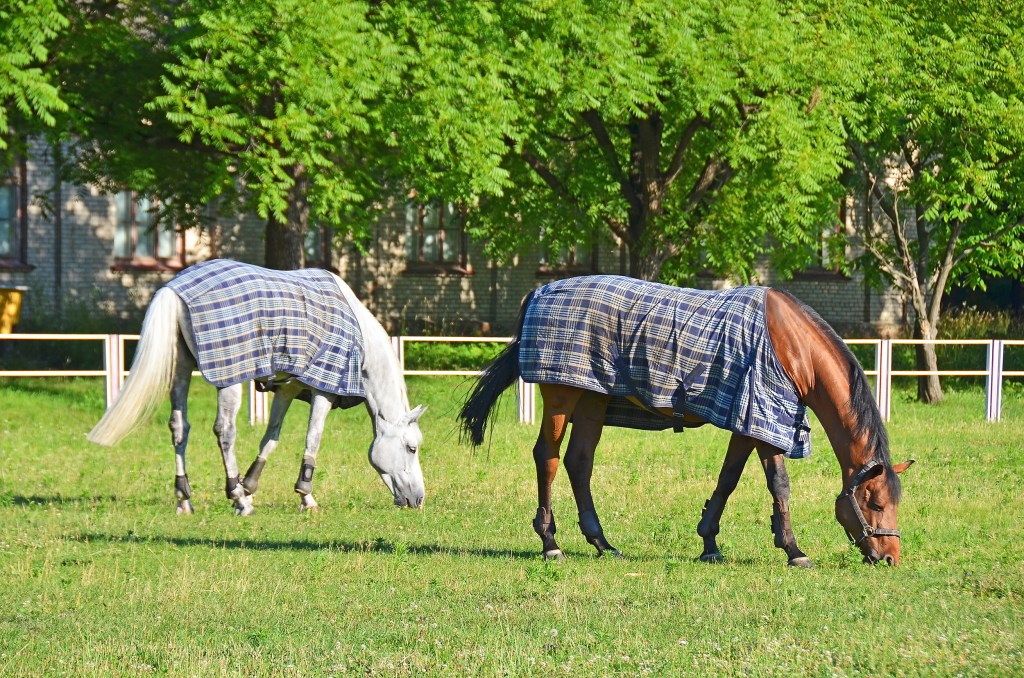
Get my FREE printable Blanket Chart HERE
If you live in a 4-season climate like I do, you’re not likely to escape the seasonal blanket-shuffle. While blankets might end up on the save side of the Invest vs Save equation when it comes to first year start up costs, it’s still an expense that can sneak up on you.
Here’s a peek into what you may be into when it comes to your year-round blanket rotation.
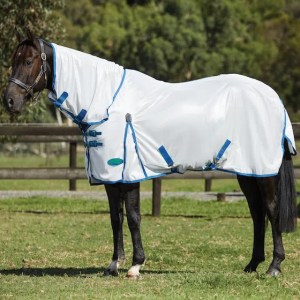
Fly Sheets – in the summertime horseflies, mosquitoes, flies, and other pests can become more than just annoying bugs. If your horse is spending time outdoors, especially in a field, being bit by a horse fly can cause nasty skin reactions and mosquitoes and flies can cause hives, rashes and skin irritations. Plus, the suns harmful UV’s can bleach your horses coat and can cause sunburns! You’ll want your horse protected with a light weight fly sheet, attached hood and fly mask to keep them protected.
Rain Sheet – in the spring and fall you’ll want your horse protected from the drizzle in a light weight rain sheet. As temperatures are still warm during the day, you want to make sure this is a 0g (gram), no fill sheet to prevent overheating. Not only will your horse appreciate staying dry, you’ll be grateful your horse stays clean after enjoying a good roll around in that muddy paddock!

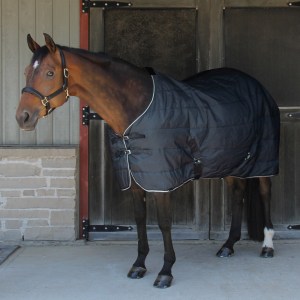
Stable Rug/Blanket – these are for when the days and nights get a little cooler. You may choose to have separate blankets for in the barn and during turn out. The turn out rug is going to get wet, dirty and potentially damaged (depending on how naughty your horse…. or your horses paddock neighbor is). This is meant to add warmth as the temperature drops.
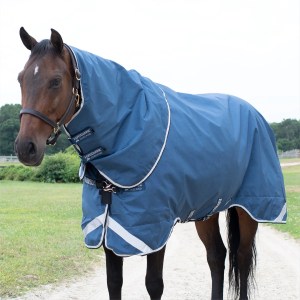
The Winter Bundle – my favorite way to prepare for winter blanketing is to buy a waterproof outer shell, and multiple interchangeable liners and detachable hood. This way no matter how cold it gets I have a swiss-army knife of blankets. I usually get the 50g (gram) outer shell, 100g and 250g liners. I’ve found this is the best solution for the weather I see.
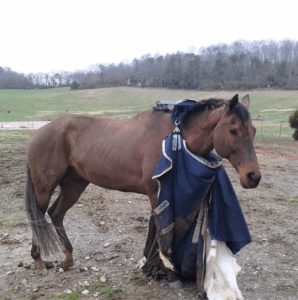
The Extra Blanket –Picture this: your sweet fur-baby mysteriously transforms into the equine version of Harry Houdini, defying all logic and managing to escape from his well fitted, well strapped, (expensive) new blanket. And if that wasn’t enough, he then proceeds to drag it through the mud, stomping, pawing, and eventually formally marking it as his own with a heaping pile of manure. Or perhaps it’s not your sweet soul whos left you scratching your head, it’s Mr. Mischievous, the cheeky paddock buddy who seems to have a taste for (rather, specifically for) brand new blankets and you find your horse with their entire backside exposed and their blanket unrecognizable. The need for replacement, repair, and a regular laundry routine is never-ending. So, it’s always wise to have a backup blanket folded away in your tack trunk. Which blanket you’ll need to replace is part of the mystery and excitement of horse ownership.
Bonus blanketing tips:
- You can re-waterproof older or second hand blankets using a number of different products on the market. Or, just pick up some ScotchgardTM next time you’re out and that works great too.
- As soon as you cycle through a blanket season and you’re officially in the next, take your blankets to be professionally washed at your local horse launderer and store it way for next season. It will keep your blankets lasting longer and you’ll always be ready for the weather to turn.
- NEVER turn your horse out in a hooded blanket in a paddock with electric fencing. As your horse looks over that fence, the straps/closures on the hood could get snagged on the fence and your horse is then stuck, getting zapped with every pulse of their heart until someone comes to free them.
That’s it! Those are my recommendations for blanketing horses in 4 seasons.

INTRODUCING: Groom School
Where amateur riders learn the skills, strategies, and confidence to handle every aspect of horse show grooming like a seasoned pro.
Other Posts You Might Like

How I Organize My Life As An Adult Amateur
Are you curious how it’s done? How we seem to ‘have it all’? Ride horses, have families, professional careers.. you know, how we’re “living the…
Keep reading
3 Reasons To Work With A Professional
Have you ever Googled “how to buy a horse” or “what to know before buying a horse”? If so, please—lovingly—step away from the keyboard. I…
Keep reading
5 Myths About Buying Horses That You Need to Stop Believing
So, you’re on the hunt for your dream horse, and everyone has advice to offer. But let me tell you – not all that advice…
Keep reading
7 Red Flags to Look for When Buying a Horse
So, you’re ready to buy your first horse? How exciting! But before you get swept up in the excitement of bringing home your new partner,…
Keep reading
Is Buying A Horse A Good Investment?
Is Buying a Horse a Good Investment? If you’ve been daydreaming about owning a horse, you’re not alone. For many equestrians, the idea of having…
Keep reading
Life Lessons From The Arena
I often find myself reflecting on my time with horses. Sometimes it’s when I’m overwhelmed with gratitude and my heat swells while I’m out riding…
Keep readingSomething went wrong. Please refresh the page and/or try again.
 Buying A Horse?