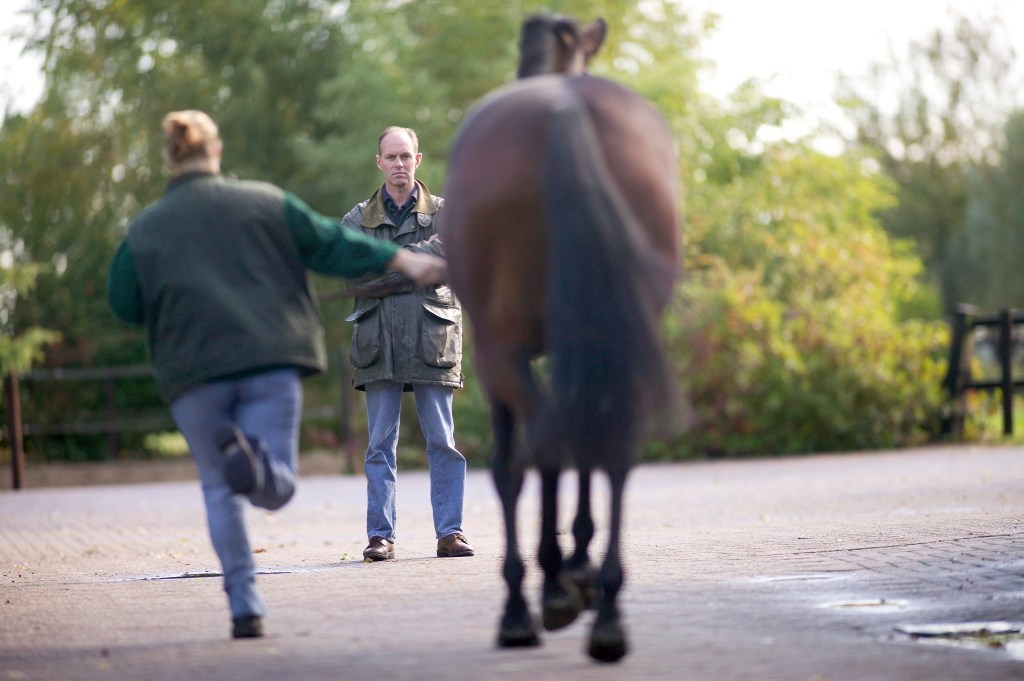
So, you’re on the hunt for your dream horse, and everyone has advice to offer. But let me tell you – not all that advice is worth following. There are some common myths about buying horses that tend to get passed around like the extra crops in the arena, and it’s time we put these to rest once and for all.
Myth #1: The perfect horse exists.
You’ve got your checklist ready: tall, dark, and handsome. Well, here’s a little secret – even your “dream” horse is going to have quirks. That perfect horse you’re envisioning? Yeah, she’s probably the one who poops in her water bucket.
If your list of criteria looks like this:
- 16.3hh
- Dark bay with four white socks and a wide blaze
- Geldings only
- Can jump 12’3” but happy to pack me around the 2’3” hunters
- Has proven show record, but isn’t too old
- Has more “go than whoa”, but is quite enough for your kids to ride
- No vices
- No remarks on the PPE
- Is in my local market (‘cause you don’t want to travel)
- And is in your budget, of course
My friend, you may be looking for a unicorn. 🦄
I’m not saying you should compromise, I’m just suggestion you reframe your criteria to prioritize suitability.
Rather than searching for what you think this perfect horse looks like (in person and on paper) get crystal clear on your goals and what you’re trying to achieve. Your perfect horse is the one that will help you achieve those goals. Even if they are a big grey mare that you swore you’d never have.

Wondering if you’re ready for horse ownership?
Download my free ‘Horse Buyers Self-Assessment’ to find out! Trust me, this is something you want to know before you commit!
Myth #2: Buying a young horse is a good way to save money
Let’s talk about young horses. Generally speaking, buying a younger horse, with less experience will likely bring down the purchase price, but that doesn’t mean necessarily that it’s a good money saving strategy overall.
Consider these 3 important factors:
- A young horse may have a more digestible price tag, but, they will have longer carrying costs overtime as you invest in the training and maintenance to bring this horse along. Training a young horse is not for the novice horse person, you’re going to have to pay for professional support.
- If you have any specific goals of your own that you are hoping to achieve, you could be adding a few years to that timeline as you focus on developing your green horse.
- Horses are fickle creatures and none are immune to injury or illness. With a young horse, there’s a risk you could loose your investment entirely with an injury or simply that this horse doesn’t perform in a way that increases their value (and your ability to recoup any of your investment).
Buying a young horse can be a fantastic and rewarding experience, but if you’re thinking of going this route as a money-saving-strategy with the upfront costs, you really should do some homework to understand the commitment you’re making and ask yourself if a young horse is going to align with what you’re looking to get out of horse ownership.
On the contrary, an older, experienced horse may allow you to achieve your goals quicker, and they will likely be teaching you a thing or two. While older horses come with their own risks, a solid citizen is worth their weight in hay when you look at what you get back from them in your expereince.
Want to know where to invest and where to save in your first year of horse ownership?
Check out my ‘Invest vs Save’ guide – it’s the perfect cheat sheet for smart spending.
Myth #3: You don’t need a vet check if the horse looks healthy.
Oh, boy. 🥴 This one makes me cringe. Spoiler alert 🚨 : Just because you kicked the tires, doesn’t mean everything is running properly under the hood.
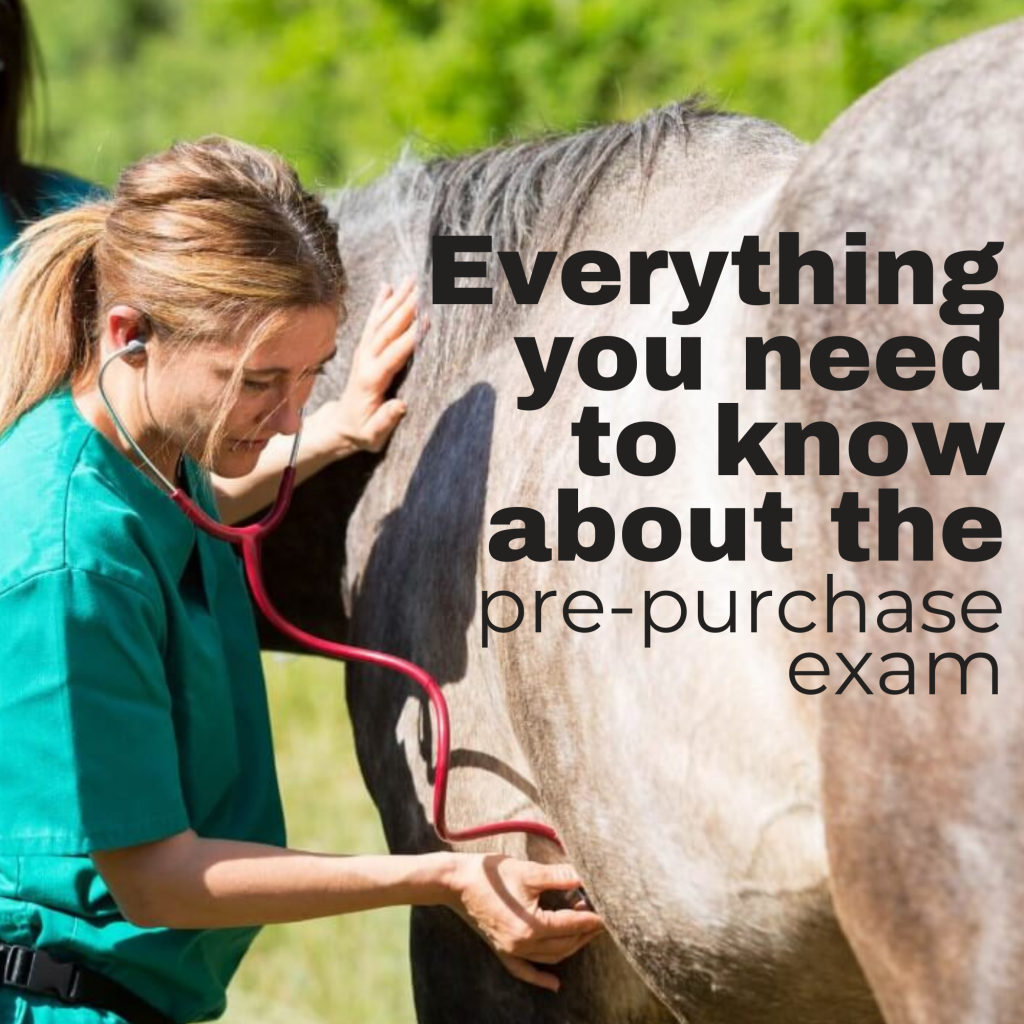
A pre-purchase exam (PPE) is a widely practiced and strongly advised step in the horse-buying process. A basic PPE will cover:
- A complete history
- A health check
- A neurological exam
- Flexion test
- Movement assessment
Additional tests might include radiographs (x-rays), drug screening or an ultrasound.
The most important thing to remember about the pre-purchase is exam is that this is NOT a pass/fail kind of test. The purpose of this exam is to uncover the risks that exists with this horse. And remember – every horse will have some level of risk. Every. Horse.
A basic PPE could reveal things like lameness (that a less experienced horse person may miss), dental issues, respiratory issues, ocular concerns, joint or tendon issues, digestive systems concerns or hoof abnormalities and conformation flaws that could affect this horses ability to do the job you will ask of him.
Some, all, or none of the findings in the PPE could be an issue for you and may or may not influence how you proceed through the purchase process. Some findings may even work in your favor as a buyer.
But the whole point of the exam is to gather enough information to make informed decisions around how you want to proceed.
There are a few circumstances where you may decide to omit the PPE, but “because the horse looks healthy” shouldn’t be one of them.
Grab a free chapter of my book that covers the Pre-Purchase Exam.
It’s the ultimate guide to everything you need to know about the PPE.
Myth #4: You have to buy a horse with perfect conformation.
Conformation is important, it’s the foundation for good performance and long-term soundness, but here’s the deal – nobody’s perfect. A horse with minor conformation flaws can still be a fantastic partner – with this very important caveat – DEPENDING ON THE INTENDED USE for this horse.
The severity of a horses conformation fault, combined with their age, breed and discipline are all factors in determining if their performance will be affected.
For example,
- A horse that is back at the knees may not make a great show jumper, but could be a great pleasure mount.
- Some conformation issues of the leg and hoof can be addressed with trimming and shoeing strategies.
- A long back could make a horse prone to soreness if not properly managed through proper warm ups and strengthening exercises to support the core – but could also be a benefit to horses in a jumping discipline.
In a nutshell, when it comes to conformation flaws, you’d be mistaken to ignore the issue, but equally wrong to write off a horse completely without looking at the big picture.
Consider the intended use of the horse, severity of the fault, age and breed before making a decision around if this horse is right for you or not.
Myth #5: A more expensive horse is always better.
Before I explain why this simply isn’t true, know this: no matter what your budget is, there will always be a more expensive horse.
Anytime you considering buying a horse, you have to start by understanding your needs, and what you want to do with this horse. With that part dialed in, you can narrow your scope to the horse that meet those needs. A horse that meets your needs, is the better horse for you.
Remember the golden rule when shopping for a horse: suitability is king.
If you find a horse that you feel is your perfect match, you may be willing to pay more than someone who didn’t feel the same way about that particular horse. To you, that horse is worth more.
You might be wondering, but what about two horses that are close in purchase prince, but one is slightly more expensive?
Is the $30,000 horse better than the $25,000 horse?
Is the $65,000 horse better than the $60,000 horse?
Is the $85,000 horse better than the $75,000 horse?
Is the $125,000 horse better than $100,000 horse?
Maybe.
But here’s the truth (and some people won’t like this)…
The asking price of a horse is often arbitrary. A horse is worth what someone is willing to pay for it.
A seller may price a horse based on what they are hoping to get back in terms of what they’ve invested. Or, they may be using market data to help determine that horse’s purchase price based on what other horses with similar criteria are priced at in the market.
As a buyer, you get to:
- Do your own research to understand market value of similar horses
- Get proof of this horses ability to do the job you will ask of him (ie; show record)
- Use the results of the PPE to determine if the associated risks that were revealed should effect the purchase price
- Use your trial period to re-affirm suitability and your willingness to pay the asking price
The seller may be willing to negotiate, they may not. That’s what they get to do. You may not be willing to pay their price, but someone else might, and they may decide to wait for that person.
Just because a horse is priced slightly higher than another, that doesn’t mean they are a slightly better horse. It may just mean that’s the price the seller arrived at.
The Bottom Line
There you have it – five of the biggest horse-buying myths, busted! 💥 Buying a horse can be an exciting but daunting journey, especially with all the misinformation out there. That’s why I created my ebook, So You’re Going To Buy A Horse? It’s packed with advice, tips, and real talk to guide you through every step of the process, so you can make a confident, informed decision.
If you’re ready to take your first steps towards horse ownership, start here, with being informed and understanding what lies ahead.

So You’re Going To Buy A Horse?
A tailor-made guide for first time horse buyers like you.
You’ll be prepared and confident to take your first steps towards horse ownership.
Other Posts You Might Like

How I Organize My Life As An Adult Amateur
Are you curious how it’s done? How we seem to ‘have it all’? Ride horses, have families, professional careers.. you know, how we’re “living the…
Keep reading
3 Reasons To Work With A Professional
Have you ever Googled “how to buy a horse” or “what to know before buying a horse”? If so, please—lovingly—step away from the keyboard. I…
Keep reading
7 Red Flags to Look for When Buying a Horse
So, you’re ready to buy your first horse? How exciting! But before you get swept up in the excitement of bringing home your new partner,…
Keep readingSomething went wrong. Please refresh the page and/or try again.
 Buying A Horse?